Choosing the Right Thermal Plaster: A Simple Guide for Real Buildings
Insulating old and listed buildings is never as simple as just adding insulation to the walls. Using the wrong system can easily lead to high internal humidity, mould growth, and trapped moisture within the building fabric.
After decades of research, thermal lime plasters have proven to be the best and most compatible solution — not only because they insulate well, but also because they do not cause discomfort for occupants or damage the structure.
Below is a clear guide to choosing the right thermal lime plaster, based on building type, conditions, and performance targets.
Why Thermal Lime Plasters Are Ideal for Old and Listed Buildings
Thermal lime plasters are the most compatible insulation solution for traditional buildings. Lime plasters have long been a part of traditio0nal architecture. By replacing the sand aggregate with insulating aggregates, we create a plaster that not only provides insulation but also behaves very similarly to historic masonry in terms of breathability, flexibility, thermal expansion, and moisture movement.
Rather than adding layers with differing behaviours, the insulation becomes an integral part of the wall. In effect, the building fabric and the insulation work together as a single, monolithic system. This is exactly what you want in an old building, where incompatibility between materials is often the root cause of problems.
Thermal Plasters vs Insulating Boards in Historic Buildings
Breathable insulating boards can work — but only under the right conditions.
The reality is that many historic walls are not flat. They often have bellies, undulations and irregular surfaces. Boards perform best when they are part of a lime-based insulating system and are fully bonded to the masonry.
Problems usually arise when boards are installed as part of a stud-wall system.
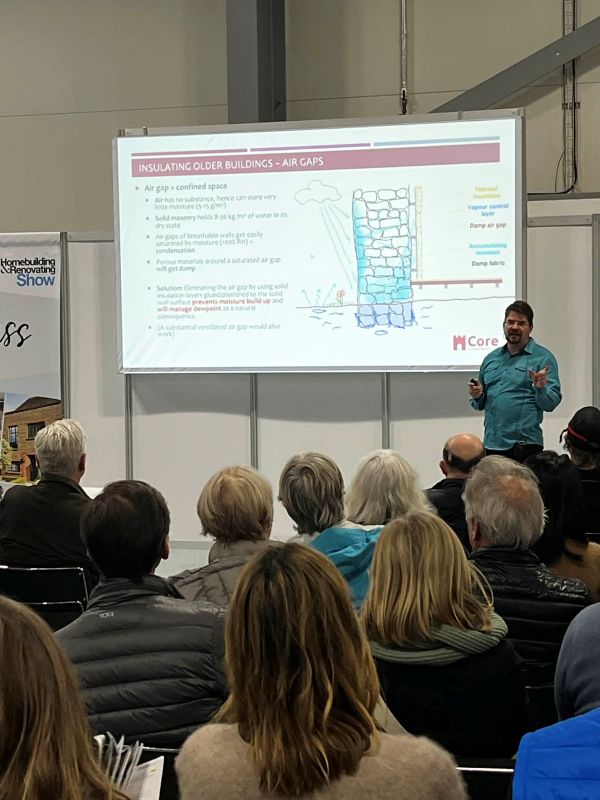
The Problem with Air Gaps and Vapour Control Layers
Most insulating board manufacturers specify a build-up that includes timber battens, an air gap and a vapour control layer. That vapour control layer is essentially a non-breathable membrane.
This is where issues begin.
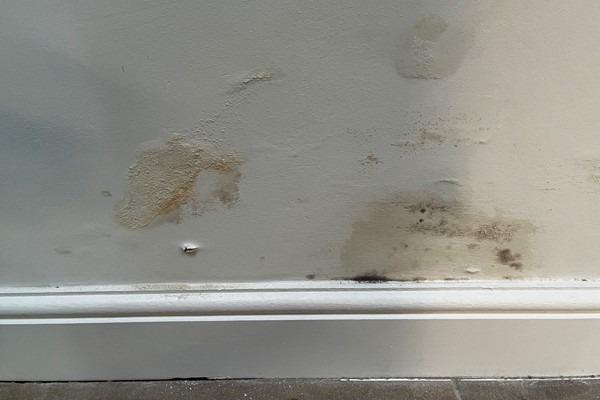
Air gaps create enclosed spaces where relative humidity can rise. Once humidity builds up, condensation forms. Vapour control layers then prevent that moisture from escaping. The result is damp trapped exactly where you don’t want it — behind the insulation.
In old buildings, this approach often results in condensation, mould, and increased insect activity within the air gap.
When Insulating Boards Can Work
There is a correct way to use breathable insulating boards in traditional buildings: bonding them directly to the masonry using lime mortar, without air gaps and without vapour control layers.
This approach keeps the system breathable and avoids condensation risks. If you’d like more technical detail on this method, feel free to get in touch.
Historic England’s Recommendation:
Insulating Lime Plasters
Both my own professional experience and Historic England’s guidance point in the same direction: insulating lime plasters are often the safest and most reliable solution for old buildings. They share similar physical properties with traditional masonry and, crucially, they don’t introduce harmful side effects. This makes insulating lime plasters the most compatible form of insulation for historic and listed buildings. That said, many people still associate insulating lime plasters only with lime–perlite or lime–hemp mixes — which are conservation-friendly, but not particularly efficient. There are now far better options available.
The Limits of Traditional Lime–Perlite and Lime–Hemp Plasters
Traditional lime–perlite and lime–hemp plasters typically have thermal conductivity (λ) values of around 0.12–0.15.
While these materials are sympathetic to historic fabric, they don’t offer strong insulation performance. Thickness quickly becomes an issue, especially around window reveals and other tight areas.
Comparition
Do Thermal lime plasters actually perform?
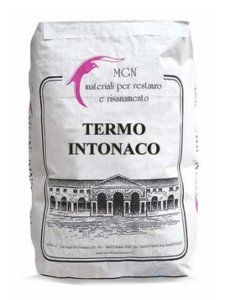
Termointonaco 2020 MGN – A Pioneer in High-Performance Insulating Lime Plaster
Termointonaco 2020 is an upgraded lime–perlite insulating plaster that includes high-performance insulating aggregates.
This makes it around three times more insulating than traditional lime–perlite mixes and comparable in its thermal performance to wood fibre or cork boards.
It is also relatively affordable, which makes it a reliable all-rounder. Termointonaco 2020 performs well across the board: good thermal performance, strong fire rating, excellent moisture tolerance and sprayable.
Because it contains no plant-based aggregates, it’s not sensitive to humidity. It can be used internally or externally and is ideal when you need to insulate large areas without pushing the budget too far.
- λ value: 0.043
- Fire rating: A1
- Moisture tolerance: Excellent (for internal and external use)
- Sprayable
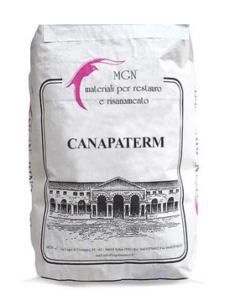
Canapaterm MGN – High-Performance Hemp-Lime Insulation
For hemp-lime projects, there is Canapaterm — a hemp-based insulating lime plaster enhanced with additional high-performance thermal aggregates.
This level of performance is comparable to commonly used insulating boards, achieved at similar thicknesses. To the best of my knowledge, no other hemp-based plaster reaches this level of insulation.
Because it contains plant-based aggregates, it’s best suited to internal use, where moisture exposure can be controlled.
- λ value: 0.052
- Fire rating: A2
- Use: Internal only
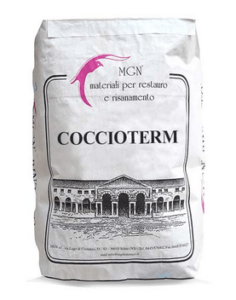
Coccioterm MGN - High-Humidity Spaces Need a Different Approach
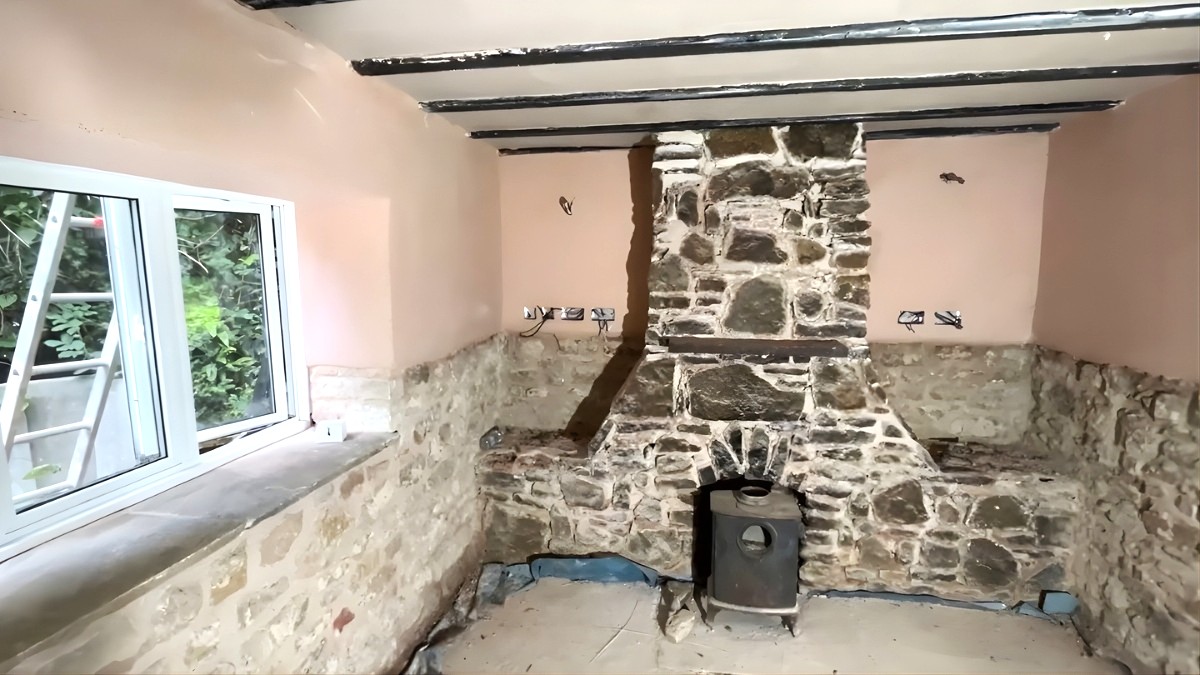
Some buildings — basements, stone cottages, indoor pools or poorly ventilated spaces — regularly experience high relative humidity.
In these cases, insulation must do more than resist heat flow. It must tolerate moisture without developing damp patches or mould.
Coccioterm is designed specifically for high-humidity environments. It contains crushed brick and terracotta, allowing it to absorb and release moisture without visible damp or mould growth. This makes it an excellent choice where humidity control is as important as insulation.
- λ value: approx. 0.062
- Fire rating: A1
- Humidity tolerance: up to 85–90% RH
- Use: Internal and external
- Sprayable
Where Super-Slim Insulation Matters
Super-Insulating Lime Plasters
Sometimes, adding thickness simply isn’t an option. There are circumstances which demand maximum performance in minimal space. This is where super-insulating lime plasters come in.
Super-insulating lime plasters are in a league of their own. They incorporate highly reflective, super-insulating thermal aggregates that introduce an additional mechanism for reducing heat transfer. As a result, this category delivers an order of magnitude improvement in thermal performance compared to what is traditionally considered a good insulator.
These plasters are ideal for:
Window and door reveals
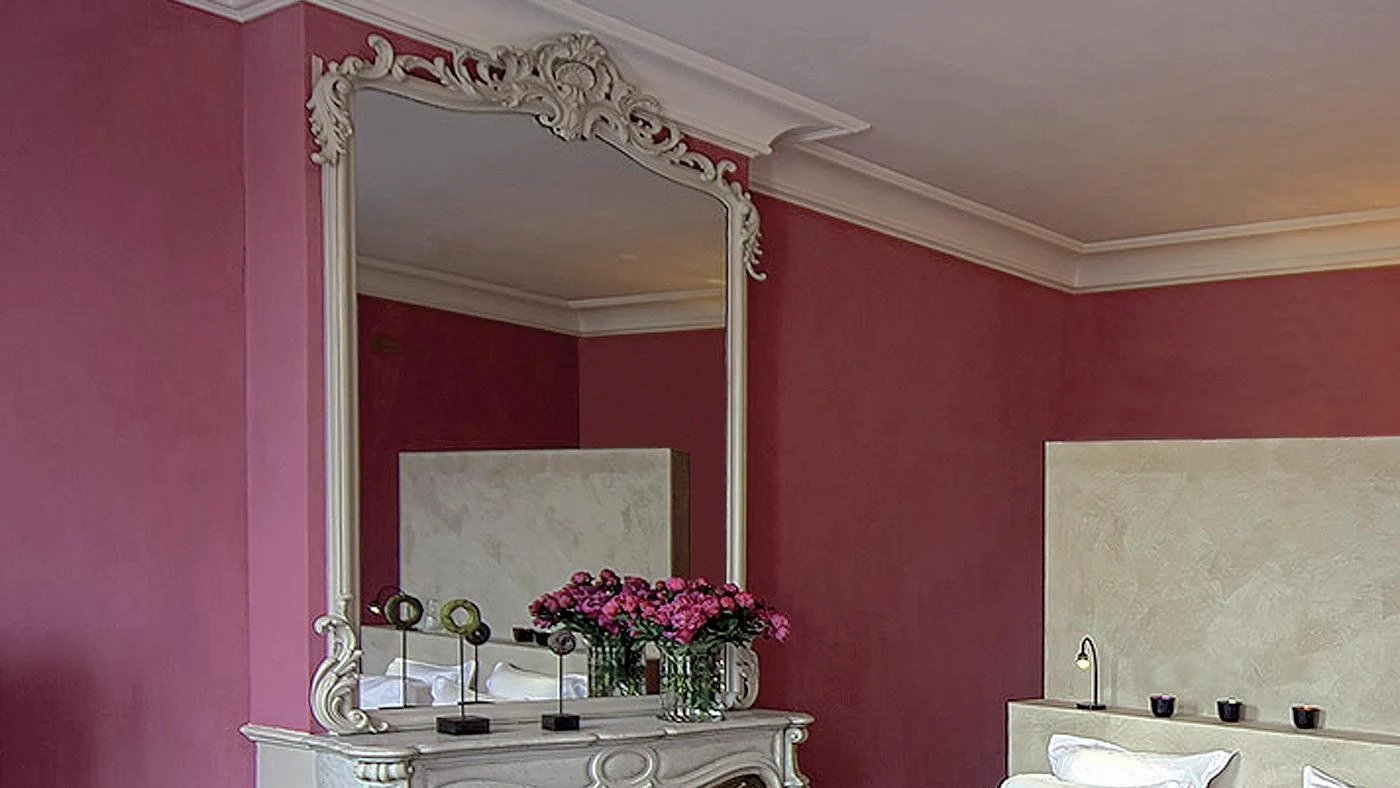
Walls with listed cornices that cannot be covered
London properties where floor space is extremely valuable
You’re effectively buying space back, rather than losing it to insulation.
TermoRasante AeroGel MGN – Slim Profile, Serious Performance
ThermoRasante AeroGel is a lime–aerogel plaster containing as much aerogel as lime can physically accommodate.
Aerogel doesn’t just resist heat flow — it reflects heat back towards the source. This dual mechanism explains the significant jump in performance compared to conventional materials.
While the material itself is more expensive, the reduced thickness (typically 40–45 mm instead of 120 mm) means material and labour costs often balance out.
- λ value: 0.016
- Thermal behaviour: Insulating and reflective
- Fire rating: B
- Use: Internal and external
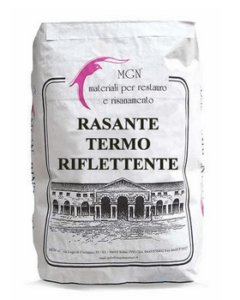
RasoThermo Aerogel – The Latest Generation
RasoThermo Aerogel represents the latest development in insulating lime plaster technology.
It combines:
- Aerogel
- Ceramic microspheres
- Cellular glass
- Thermal mass from crushed terracotta
The result is exceptional performance.
The added thermal mass slows heat transfer even further, while the A1 fire rating makes it suitable for schools, hospitals, offices and other regulated buildings.
Being spray-applied, it’s also ideal for large-scale projects where speed and consistency matter.
- λ value: 0.011
- Fire rating: A1
- Application: Sprayable
- Use: Internal and external
Learn More About These Unique Thermal Insulating Lime Plasters
Thermointonaco 2020 MGN
Terrmointonaco 2000 MGN is a super-insulating, labour-efficient option for thin-layer application.
Canapaterm MGN
Canapaterm MGN is a hemp-based insulating lime plaster enhanced with additional high-performance aggregates.
Coccioterm MGN
Coccioterm MGN is designed specifically for high-humidity environments.
TermoRasante Aerogel MGN
TerrmoRastante Aerogel MGN is probably the best insulator on the market, a pure aerogel-lime mix. Our best selling product
RasoThermo Aerogel
RasoTermo Aerogel represents the latest development in insulating lime plaster technology with exceptional performance.
Now Available Across the UK
Got Questions?
Planning Your Own Project?
Choosing the Right Thermal Plaster: A Simple Guide for Real Buildings Read More »